Coffin
The colour of the coffin interior (silk framed) must be coordinated with the burial clothing; Chinese style matches Chinese style, and Western style matches Western style.
Hung Hom · Complete Funeral Services · FEHD-Licensed Undertaker
A guide to choosing burial clothing and its different forms. How do even numbers for men and odd numbers for women work? What are wrapping quilts, burial caps and covering quilts? Each item is explained.
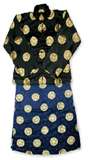
Burial clothing is the last "dressing" made by the family for the deceased. Many family members really want to do a good job in this matter, but they don’t know where to start - how many cases? What colour? Chinese style or Western style? Can he use his favorite condom during his lifetime?
This page will start with the origin of burial clothing , and then explain one by one Hong Kong’s customs on the number of pieces, six categories, fabric principles, cremation specifications, matching techniques , and Christian styles .
Tim Fat Funeral is FEHD licensed undertaker , shop address G/F, 26 Baker Street, Hung Hom, Kowloon, Hong Kong . We are happy to provide free professional advice (852) 82099774 Mr Wu.
Burial clothing is the clothes worn by the deceased. "Shou" means, as the name suggests, eternal life . After the deceased passed away, a filial son would not talk about his death, so he would call the clothes worn by the deceased " burial clothing " to symbolize good luck and longevity, and avoid directly referring to him as "dead man's shirt" - the name itself is already thoughtful.
In traditional societies, with the development of productivity and improvement of living standards, funerals have become increasingly luxurious and complicated. At that time, the clothes of the deceased represented the status, wealth and class during his lifetime, so what kind of clothes the deceased wore, how many clothes he wore, and even the names of the clothes were very particular at that time.
Later, funeral reforms were implemented in various places, advocating simple funeral arrangements and cremation of the body of the deceased, and abandoning the excessive extravagance of burial clothing customs in the old society. At one time, the burial clothing industry was regarded as a remnant of old customs and declined, and the form of burial clothing became monotonous and uniform.
Now, in order to meet the needs of bereaved families at different consumption levels, burial clothing varieties and colours have become diversified . While eliminating outdated regulations, the industry also studied and improved folk customs and habits, and designed a variety of new styles and patterns. Styles designed for different religious beliefs also appeared.
There are gender and age differences in styles of burial clothing, among which the gender difference is obvious and the age difference is slight . According to folk customs, the funeral of the elderly has always been treated as a happy event , so there is a saying of " red and white weddings ". Therefore, the burial clothing of the elderly often adopts bright and fancy colours . This is something that many family members don’t expect – burial clothing does not have to be dull.
The general custom in Hong Kong is " even numbers for men and odd numbers for women ", that is, men's burial clothing has an even number, and women's burial clothing has an odd number . This is the most common approach in Hong Kong.
| male the deceased | female the deceased | |
|---|---|---|
| Number of pieces | Even number, minimum six pieces | Odd number, minimum seven pieces |
| Common combination (saying one) | Underwear, underwear, shirt, pants, long shirt, mandarin jacket (6 pieces in total) | One more skirt than men's clothing (7 items in total) |
| Common combinations (statement 2) | Long gown, mandarin jacket, single shirt, single pants, underwear, underpants | Jacket, pleated skirt, robe, single shirt, single trousers, underwear, panties |
| Accessories | Shoes, socks, towels, hats , fans | Shoes, socks, towel, fan ( generally no hat ) |
Don’t memorize: The number and combination of pieces are configured by us according to family habits. Family members do not need to remember . You only need to decide style (Chinese/Western/religious style), colour preference , and provide the deceased height and body size shoe size .
Online information sometimes talks about "burial clothing must be odd", "three collars, five collars and seven collars", which seems to be contradictory to Hong Kong's "even numbers for men and odd numbers for women". In fact, the two do not conflict - one is ancient system , and the other is Hong Kong's current folk practice .
In ancient times, the quantifier for burial clothing was different from that of ordinary clothing:
In the old days, ordinary people wore three collars ; officials and wealthy families wore five collars and seven collars ; emperors and empresses wore nine collars after their death, which was called " Nine-five-collar ". It can be seen that the number of pieces of burial clothing in that year was itself a kind of identity mark.
What do you want to watch today? There is no hierarchy in modern Hong Kong, and the number of pieces is mainly configured according to the folk customs of even numbers for men and odd numbers for women . Ancient knowledge is worth understanding, but it does not need to be copied - The right intention is more important than the number of pieces. If your family has its own traditional practices, tell us and we will follow them.
Burial clothing is understood in a broad sense, and there are countless varieties. The family members of the deceased can choose various styles and fabrics according to their needs ( except for fabrics that easily cause pollution ). The following are the traditional and popular types of burial clothing:
A wrapping quilt for the deceased, shaped like a cloak and made of silk or satin, embroidered with auspicious motifs such as flowers, insects, fish and the God of Longevity. It is placed around the deceased as the outermost layer.
Burial clothing includes clothes, pants and skirts . Clothes include long gown, short jacket, mandarin jacket, cheongsam , etc., and underwear, middle coat, outer coat ; pants and skirts are available long, short, and Chinese and Western different styles. This is the main body of the entire configuration.
Burial cap is also called longevity crown . Men generally wear top hats and skullcaps , and some also wear traditional Qing Dynasty melon skin hats ; women , especially elderly women in the south, often wear The clamshell-style velvet hat has an " old lady " look, but is not suitable for young and middle-aged women . Please note that according to Hong Kong customs, women’s burial clothing generally does not have a hat.
Burial shoes are generally Chinese cloth shoes or Western style leather shoes ; burial socks are generally cotton socks . The shoe style must be consistent with the overall Chinese or Western style - this is something that many people overlook.
The burial pillow is made of paper or cloth . According to traditional customs, the headrest of is decorated with clouds , and the footrest of is decorated with two lotuses , which means " stepping on lotus to ascend to the west ". The "embroidered soft pillow" included in the Taoist and Buddhist ritual packages falls into this category.
A burial quilt is a long, narrow quilt laid over the deceased as the outermost covering. It is made of cloth or satin and embroidered with motifs such as stars, the moon, dragons and phoenixes.
Traditionally, two burial quilts were used when placing the deceased in the coffin: one underneath the body and one over it, separating the body from the coffin lid. Today, as remains are cremated, just one quilt over the deceased during the farewell ceremony.
What are the descendants of? burial quilt is a basic burial clothing configuration; descendants quilt is presented by descendants to cover the deceased, symbolizing descendants' reproduction and blessing future generations , with the meaning of family inheritance. Tim Fat Funeral's Taoist/Buddhist ceremony package already includes embroidered soft pillow and descendant quilt .
The fabrics of burial clothing are all made of cotton, linen, silk, satin, and wool . The reason is not only traditional, but also based on practical considerations:
Because chemical fibre fabrics will burn into liquid during the incineration process, which not only affects the quality of ashes, but also causes environmental pollution, so generally burial clothing is not made of chemical fibre fabrics.
| Fabric | Features | cremation performance |
|---|---|---|
| Cotton | Soft and skin-friendly, reasonably priced | Burns completely, leaving no residue |
| Hemp | Simple and breathable, also used for mourning clothes | Burn completely |
| silk | It has a soft luster and is often used in burial quilts. | Burn completely |
| Satin | Thick and gorgeous, Generally, burial clothing made of satin fabric is more expensive | Burn completely |
| Hair | Warm and thick | Burn completely |
| Chemical fibre (not suitable) | Low price but poor quality | Will burn into liquid, affecting the quality of ashes and causing pollution |
In addition, the choice of fabric also involves the grade of the "funeral" ceremony . Generally burial clothing made of satin fabric is more expensive, and family members should choose suitable burial clothing according to the specific situation.
This section is the most practical part of the page. Burial clothing not only needs to be beautiful, but also needs to be suitable for cremation .
FEHD clearly states: Items made of metal or plastic materials or valuable burial objects should not be placed in the coffin . Under the Cremation and Gardens of Remembrance Regulation ( Chapter 132M ), if the coffin containing human remains contains any that in the opinion of the Director of FEHD is unfit for burning in a crematorium sawdust, charcoal, bitumen, tar, raw cotton, metal or other articles or substances , the remains will not be accepted for cremation in government crematoriums . For details of coffin specifications, please see Complete Guide to Coffin Purchasing .
If you want to be buried with someone, can you order it? Take back gold articles, jades, watches, etc. as souvenirs and replace them with paper offerings and burn them in the ceremony - it is in compliance with the regulations and still retains your heart. In addition, medical implants (such as pacemakers) must be disposed of before burial, and the undertaker and crematorium must be informed truthfully. Please be sure to inform us in advance.
The key to choosing burial clothing is to pay attention to matching , that is to say The styles, colours, and patterns of clothes, pants, shoes, hats, and quilts must be coordinated and echo .
In particular, distinguish Chinese style from Western style in terms of style. Never wear a suit with cloth shoes on top . If it is neither Chinese nor Western, it will appear neither fish nor fowl . We decided that if we want to do Chinese style, we will have a full set of Chinese style, and if we do Western style, we will have a full set of Western style.
When choosing colours, pay particular attention to the overall colour scheme. Bring individual colours together within a unified palette and avoid large areas of contrasting colours, which can look cluttered and harsh. Burial clothing for an elderly person may be colourful, reflecting the traditional idea of a long life being celebrated at a funeral, but the colours should remain harmonious.
Patterns can also be divided into classical, modern, Chinese and Western styles , and the style should be coordinated and unified . For example, if a burial quilt is embroidered with longevity stars, it is not suitable for a Western-style plain burial quilt.
Burial clothing is not isolated - when paying respects to the deceased, the family members see the overall picture of burial clothing + coffin interior (silk framed) + burial quilt + pillow . Therefore, when selecting burial clothing, you should also confirm the colour of the coffin lining to ensure overall coordination. A Chinese-style coffin with Chinese-style burial clothing and a Western-style coffin with Western-style burial clothing are the most stable. For a complete list of supplies, see Material List .
In addition to traditional styles, there are also burial clothing designed for Christians . Features are:
Catholic Catholics also have corresponding choices to match the solemn atmosphere of the memorial mass. In terms of Buddhism , some families will add death quilts, lotus seats, etc.; Non-religious farewell gifts are the most liberal and can be completely configured according to the style of the deceased.
| religion | burial clothing orientation | Supporting |
|---|---|---|
| Taoism/Tradition | Complete set of Chinese style, available in bright and fancy colours, embroidered with auspicious patterns | burial quilt, burial cap, burial pillow, burial quilt, posterity quilt, gold and silver jewelry |
| Buddhism | Be solemn and solemn, avoid being too bright | Quilt for afterlife, lotus seat, money for afterlife |
| Catholic Funerals | Plain colour, simple, similar to formal wear | Flowers, Bibles, rosary beads (note the cremation regulations) |
| Protestant Christian Funerals | Plain simple style designed for Christians | flowers, bible |
| No religion | According to the style of the deceased, the clothes before death can be used | Flowers, life photos |
For complete arrangements of various religious ceremonies, see Various Religious Ceremonies and Taoism. Buddhist ritual .
Yes, and more and more families are choosing to do this. Common examples: the deceased’s favorite suit, cheongsam, Tang suit, work uniform, jersey, and even wedding dress. For family members, seeing the deceased "in their own clothes" is often more meaningful than luxurious burial clothing.
Some people think that burial clothing is mainly for the elderly , and the younger deceased usually wear the clothes they liked during their lifetime. However, in reality there are no hard and fast rules and it depends on the wishes of the family.
But there is one thing you must check: the cremation specifications. During his lifetime, many of his clothes had metal zips, rubber buttons, metal buckles, PVC coating or chemical fibre fabrics . It is recommended that you submit it to us for inspection beforehand. We can: 1. Recommend replacing some accessories; 2. Use traditional burial clothing as the inner layer and lifetime clothing as the outer layer; 3. Wear the lifetime clothing when visiting the deceased and change it before burial. In short it is better not to wait until the day of the funeral procession to discover the problem first .
By providing the following information, we can quickly configure the appropriate style:
Burial clothing, burial quilt, burial pillow and accessories are delivered to the funeral parlour, ready together with coffin and interior decorations.
Before and after the body of the deceased is moved from the mortuary to the auditorium, funeral parlour or undertaker professionals are responsible for cleansing and wearing burial clothing. Some families will be accompanied by close relatives or participate symbolically. This can be discussed with us in advance.
A dedicated person will handle the grooming so that family members can feel at ease when paying their respects. If there are photos of the deceased as a reference, the effect will be closer.
Place embroidered soft pillow , descendants quilt , cover burial quilt , and place gold and silver jewelery and pair of longevity head and tail lamps according to the ceremony. .
Family members first paid their respects and made sure they were properly groomed. If adjustments are needed, they can be made immediately at this time.
The family paid their last respects, sealed the coffin, and then departed for the funeral procession. See funeral parlour the wake and funeral guide for a complete schedule.
We are happy to provide free professional advice (852) 82099774 Mr Wu.
Supporting arrangements
The colour of the coffin interior (silk framed) must be coordinated with the burial clothing; Chinese style matches Chinese style, and Western style matches Western style.
The package includes premium Chinese burial clothing, embroidered soft pillows and family quilts, starting from 8,800.
Burial clothing orientation for Christian sabbath rites, Catholic memorial masses and non-religious farewell rites.
Gold and jade articles should not be buried with them. Instead, paper offerings can be used instead and burned in ceremonies.
A complete schedule of encoffining, viewing of the deceased and coffin sealing.
Special funeral services include burial clothing, which is also configured according to specifications, simple and solemn.
Burial clothing is the clothes worn by the deceased. "Shou" means, as the name suggests, eternal life . After the deceased passed away, the filial son tabooed talking about death , so he named the clothes worn by the deceased "burial clothing", taking the meaning of good luck and longevity.
The general custom in Hong Kong is " even numbers for men and odd numbers for women ". A common saying is the deceased male should wear at least six pieces (long gown, mandarin jacket, single shirt, single trousers, underwear, underwear), the deceased female should wear at least seven items (jacket, pleated skirt, robe, single shirt, single trousers, underwear, underwear). There are also accessories such as shoes, socks, towels, hats and fans. Women's clothing generally does not have hats . Each family's customs are slightly different.
This is the difference between the ancient system and Hong Kong’s current custom . In ancient times, the odd number is auspicious: the top is called " collar ", which has three collars, five collars, and seven collars; the pants are called " waist ", which has three or five waists, and " five upper garments and three lower garments " means five tops and three pairs of pants. In the old days, common people wore three collars, officials and wealthy families wore five collars and seven collars, and emperors and queens wore nine collars , which was called " Nine-Five-Collars ". Currently in Hong Kong, " even numbers for men and odd numbers for women " are the main ones. There is no contradiction between the two , they are just differences in era and regional customs.
Traditional quantifier for burial clothing. The top is not called "piece" but "collar" (in ancient times, all burial clothing had a collar); the trousers is not called "strip" but "waist" . So "five upper garments and three lower garments" means wearing five tops and three pairs of pants .
Six categories: 1. burial quilt (body wrapping quilt, shaped like a cloak, worn as the outermost layer); 2. burial clothing (clothes, trousers, skirts, including gowns, short jackets, mandarin jackets, cheongsam, divided into underwear and outerwear); 3. burial cap (Shou Guan); 4. burial shoes burial socks ; 5. burial pillow ; 6. burial quilt .
A wrapping quilt for the deceased, shaped like a cloak and made of silk or satin, embroidered with auspicious motifs such as flowers, insects, fish and the God of Longevity. It is placed around the deceased as the outermost layer.
Burial cap is also called longevity crown . Men generally wear bowler hats and skullcaps , and some also wear the traditional Qing Dynasty melon skin hat ; women (especially elderly women in the south) often wear clamshell-style velvet hats , which give them an "old lady" look, but are not suitable for young and middle-aged women. . According to Hong Kong custom, women's clothing generally does not include hats.
The burial pillow is made of paper or cloth . According to traditional customs, the headrest of is decorated with clouds , and the footrest of is decorated with two lotuses , which means " stepping on lotus to ascend to the west ".
A burial quilt is a long, narrow quilt placed over the deceased as the outermost covering, made of cloth or satin and embroidered with stars, the moon, dragons and phoenixes. Traditionally, two were used: one beneath the body and one over it, separating the body from the coffin lid. Today, as remains are cremated, only one quilt needed over the deceased during the farewell ceremony.
The burial quilt is the quilt that covers the deceased when he is buried, and is a basic configuration; The descendant quilt is presented by descendants to cover the deceased, symbolizing the reproduction of descendants and the blessing of future generations . Taoist/Buddhist ritual package Includes embroidered soft pillow and poster quilt.
Made of cotton, linen, silk, satin, wool . Because chemical fibre fabrics will burn into liquid during the incineration process, which will not only affect the quality of ashes, but also cause environmental pollution , so generally burial clothing is not made of chemical fibre fabrics. This is also consistent with the requirement of FEHD that "items made of metal or plastic materials should not be placed in coffins."
Burial clothing varies with sex and age, although differences by sex are pronounced and those by age are slight. Traditionally, the funeral of an elderly person may also celebrate a long life, reflected in the expression “red and white celebrations”. Clothing for older people therefore often uses bright, decorative colours. Keep the colours within one overall palette and avoid large areas of contrasting colours.
Three principles: Style - Chinese style and Western style should be distinguished , Do not wear a suit on top and cloth shoes on the bottom ; Color - unified in a general tone, no contrasting colours in large areas; Pattern - Classical, modern, Chinese and Western styles should be coordinated and unified . It is also recommended to consider together with coffin interior colour .
Fabric influences the level and cost of funeral attire; satin-woven burial clothing is generally more expensive. The number of garments, detail of embroidery and included accessories (shoes, socks, scarves, caps and fans), and whether the style is Chinese or Western, also affect the price. We itemise everything in writing.
Yes. In addition to traditional styles, there are also burial clothing designed for Christians . Most of them are plain colours and simple tailoring to match the atmosphere of the Sabbath service. Do not use traditional Taoist patterns . Catholic Catholics also have corresponding choices. We offer both traditional and Christian styles.
Yes. Many families will choose the deceased's favorite or most representative clothes (suits, cheongsams, uniforms, wedding dresses). Some opinions believe that burial clothing is mainly designed for elders , and the younger deceased wear more clothes during their lifetime. But must comply with cremation regulations : Avoid metal zips, rubber buttons, PVC coating and prefer natural fibres . It is recommended to have it checked by us beforehand.
Avoid metal zips, plastic buttons, metal decorative clasps and PVC coatings, as well as synthetic fabrics. The FEHD advises that metal or plastic objects and valuable burial items should not be placed inside the coffin. Under the Cremation and Gardens of Remembrance Regulation (Cap. 132M), if the coffin contains sawdust, charcoal, pitch, tar, raw cotton, metal or other materials the Director considers unsuitable for burning, the remains will not be accepted for cremation in a government crematorium.
Not recommended. FEHD clearly states that metal or plastic objects and valuable burial objects should not be placed in the coffin. Gold, jade, watches, glasses, electronic products and batteries are recommended to be taken back by the family as a souvenir before burial, or to be incinerated as paper offerings instead. Medical implants (such as pacemakers) must be disposed of before burial and be truthfully informed.
the deceased height, body shape (shoulder width, waist circumference), shoe size , gender and approximate age ; selected religious form ; style (Chinese or Western style); colour and pattern preference; whether you need accessories (shoes, socks, towel, hat fan). If the deceased has a larger or special body shape, he should inform as early as possible so that time can be allocated for the appropriate size.
Usually in the evening of setting up the mourning hall . Before and after the body of the deceased is moved from the mortuary to the auditorium, funeral parlour or undertaker professionals are responsible for cleaning the body, wearing burial clothing, makeup and encoffining the body of the deceased. After that, embroidered soft pillows, quilts, etc. are placed. The family members then pay their respects to the deceased . Some families will be accompanied by close relatives or participate symbolically.
It is best to choose them together. Burial clothing should coordinate with the coffin’s silk lining. Chinese clothing with a Chinese coffin, or Western clothing with a Western coffin, creates a consistent appearance. Both must meet the same cremation requirements. We recommend itemising them in one written quotation.
No. Simple arrangements still deserve proper care. Our concessionary funeral services for CSSA recipients, from HK$8,800, include burial clothing that meets the same specifications, in simpler styles without expensive satin fabrics. Dignity does not depend on the amount spent. When a CSSA recipient dies, relatives or friends may apply to SWD for a burial grant of up to HK$17,870 in 2026, within six months of the death.
Burial clothing is one of the things that family members can personally decide for the deceased. Don’t be anxious, and don’t feel like you don’t know. You only need to tell us what kind of person the deceased is, what his hobbies are, and what his family habits are - we will arrange the rest and write down a list item by item for you to check.
Tim Fat Funeral is FEHD licensed undertaker . The store address is G/F, 26 Baker Street, Hung Hom, Kowloon, Hong Kong . It is within walking distance of the three funeral parlours of the Universal, International and Global Funeral Parlours. Serving Hung Hom, To Kwa Wan, Kowloon City, Ho Man Tin, Whampoa, Yau Tsim Mong, Sham Shui Po and Wong Tai Sin areas, and also undertakes cases from all districts in Hong Kong and cross-border cases. We are happy to provide free professional advice (852) 82099774 Mr Wu , available 24 hours a day.
Contact method: Phone (24 hours) 82099774 · WhatsApp 62384028 · Email timfatfuneral@gmail.com ·Fax 3599 9637·Address: G/F, 26 Baker Street, Hung Hom, Kowloon, Hong Kong. For transportation details, please see and contact us .
The knowledge, types and matching principles of burial clothing on this page are compiled from traditional funeral literature and common industry practices; Hong Kong's customs of the number of "men, women and men" are based on the local funeral industry and media information; cremation regulations are quoted from the Food and Environmental Hygiene Department (FEHD) Cremation Coffins Code and the Cremation and Gardens of Remembrance Regulation (Chapter 132M); CSSA burial grant is quoted from the Social Welfare Department (SWD) CSSA Guidelines. The customs of each family, altar and region may be different. The actual wishes of the family and the arrangements of the officiating master shall prevail. Government regulations may be revised from time to time, please refer to the latest official announcement, or call us for free inquiries. This page was last edited: September 2026.