Hung Hom · Complete Funeral Services · FEHD-Licensed Undertaker
Funeral Paper Offerings | A Taoist Checklist and Their Meanings
Standard paper offerings for Taoist funeral rites, with custom pieces available on request. Every offering has a particular place and meaning.
Home › Funeral Supplies › Paper Artwork paper offerings
paper offerings are not decoration, but part of the ceremony
Many family members are holding a funeral for the first time, and they will be confused when looking at the list of paper offerings - Crane, Willow Banner, Wangxiang Terrace, Golden Bridge and Silver Bridge, what exactly are they, and what are they? In fact, each piece is not a decoration , but a physical symbol in the Taoist ritual process. It is carried out in conjunction with the rituals of Taoist ritual masters, and represents the family members cautiously pursuing the future and hoping that the deceased will be settled in another world.
This page will explain the name and meaning of each paper offering on the list one by one, and explain the differences in customization, burning paper offerings, venue restrictions and the practices of each religion. Tim Fat Funeral is a FEHD licensed undertaker, located at G/F, 26 Baker Street, Hung Hom, Kowloon, Hong Kong . We can arrange a suitable combination of paper offerings according to the family budget and the preferences of the deceased.
Paper Crafting Technique: Representative works of Hong Kong’s intangible cultural heritage
The Leisure and Cultural Services Department announced the first " Representative List of Hong Kong Intangible Cultural Heritage " on August 14, 2017 , covering a total of 20 items , " Paper Crafting Technique ” is one of them (item 19 on the list).
The official introduction explains: “Using simple materials such as bamboo strips, tissue and coloured paper, and silk, craftspeople make objects through paper construction and painting. The craft has an important role in traditional celebrations and religious rites. Common examples include ceremonial flower rockets, figures of the Ghost King, lanterns, dragons, lions, qilin (Chinese unicorns) and paper offerings. It carries the histories and cultures of different communities and has considerable social and cultural value.”
The funeral ceremony itself is also an intangible cultural heritage
The first " Hong Kong Intangible Cultural Heritage List " includes " Traditional Funeral Ceremonies ", numbered 3.54 . The list points out that traditional funeral rituals mainly include: reciting the Tou Tou Sutra, Breaking the Hell Gate ritual, buying water, enclosing, lucking in wealth, saying goodbye to spirits, post-funeral meal and post-funeral meal , etc.
Common misunderstandings clarified: It is often said that "Breaking the Hell Gate ritual is Hong Kong's intangible cultural heritage." A more accurate statement is - "Breaking the Hell Gate ritual" is an integral part of Hong Kong's "Traditional Funeral Ritual" (List No. 3.54) , rather than an independent item. In addition, "Breaking the Hell Gate ritual" can also be seen in the rituals of many Bon Shenghui projects in Hong Kong. For relevant religious arrangements, please see One-stop service Taoism. Buddhist ritual .
In other words, behind every paper offering you prepare for the deceased is a handicraft that has been officially recognized by the government and needs to be conserved; and the entire funeral ceremony is also a cultural tradition recorded on Hong Kong’s intangible cultural heritage list.
General Taoist rituals
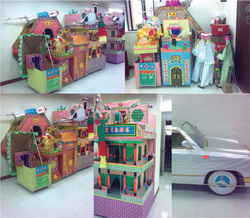
One crane; one willow banner; one principal spirit tablet; one additional memorial tablet; two red and white banners; one bathing room; one home-viewing terrace; two maidservants; one gold bridge; one silver bridge; one Western-style safe; two large leather trunks; one basin of complete clothing; one gold mountain; one silver mountain; one Western-style house; one garden; one Wenming Bridge; and two sedan-chair bearers. Labour and furnace charges vary between funeral parlours.
Others can be made according to customer requirements, such as massage chairs, carts, stadiums, airplanes, billiard tables ...
We are happy to provide free professional advice (852) 82099774 Mr Wu
Item-by-item meaning comparison table
The following explanation refers to research on Chinese funeral customs in Hong Kong funded by the Lord Wilson Heritage Trust, as well as the common practice of Taoist funerals in Hong Kong. The customs of each altar and each country are slightly different, and the actual arrangements of the officiating Taoist ritual masters shall prevail.
Viewed as a whole: the list follows a clear narrative: first purification (the bathing room), then looking back towards home (the home-viewing terrace), followed by crossing bridges to ascend to the immortal realm (the Gold, Silver and Wenming Bridges). Along the way there are guides (cranes and willow banners) and attendants (maidservants and sedan-chair bearers). On arrival there is a home (the Western-style house and garden), wealth (gold and silver mountains and the Western-style safe), and clothing (the complete set of clothing and large leather trunks). Understanding this sequence shows that these are more than a collection of paper figures.
Materials and four major processes
Traditional paper crafting is all handcrafted . The same style is made by different masters, and the look and details will be obviously different. The basic materials and processes are as follows:
- Bamboo strips Bamboo material split into thin strips is used to form a three-dimensional frame and is the support for the entire work.
- Gauze paper has high toughness and is used for pasting and reinforcing interfaces.
- Color paper Provides colour and texture, often used in clothing, walls, roofs, etc.
- Silk cloth Used for areas that are more delicate or require a soft drape effect.
In terms of process, the industry generally summarizes it as four steps: " tie, pounce, write, and install ":
Building the Frame
Bamboo strips are used to form a three-dimensional frame, which determines the proportion, posture and structural strength of the work. This step is the most important test of the master's skill.
Applying the Paper
Use gauze paper or coloured paper to paste the frame layer by layer to make the surface smooth and shaped.
Painting
The painting skills are used to add patterns, facial features, clothing details and words to give the work a look.
Assembling
Add accessories, assemble parts, and modify details to complete the entire work.
Because they are all hand-made, paper offerings cannot be ordered in large quantities at short notice - especially large-scale or highly simulated custom-made products. This directly affects your funeral schedule, which will be discussed in the next section.
Customized paper offerings: According to the deceased’s preferences during his lifetime
In addition to general Taoist ritual supplies, others can be made according to customer requirements. Examples included in the original list include:
- Massage chair —— The deceased used it frequently during his lifetime and regretted that his children did not fulfill their filial piety. Many families will choose this chair.
- Large car - luxury car style, hoping that the deceased will have easy access to the other world.
- Stadium ——Football field, basketball court, commemorating the deceased’s sports hobby during his lifetime.
- Airplane - Hope the deceased can fly freely.
- Billiards table ——Continue the entertainment during your lifetime.
Common custom styles in recent years also include: mobile phones and tablets, laptops, coffee machines, mahjong tables, pets (cats and dogs), musical instruments (piano, erhu, guitar), yachts, bicycles, tea sets, dressing tables, cloakrooms, and even the shop or tools where the deceased worked. The greatest significance of this kind of custom-made products is to allow family members to have a concrete way to say "I remember how much you love me" .
Ordering time and process
Step 1: Determine the date for setting up the mourning hall
The funeral schedule is based on the allocated cremation period as the anchor point. For reservations of cremation time slots and church booking arrangements, see funeral parlour full guide .
Step 2: Make a custom request
Provide reference photos, size expectations and budget range. The earlier the better - stock styles can be supplied on the same day or the next day, while customized styles require manual work and take a long time.
Step 3: Confirm size and placement
It needs to accommodate the space of the auditorium/chamber and the capacity of the burning paper offerings facilities. Large-scale works may not be accommodated in all venues.
Step 4: Check off the written list
Itemize the name, quantity, size of the paper offerings, and the burning paper offerings or charges for the funeral parlour.
Practical reminder: The larger and more complex the custom-made paper offerings are, the longer the production time is, and the more restricted the venue and burning paper offerings facilities are. If you are pressed for time, consider substituting a smaller size but finely crafted style; size is not what you want.
Burning Paper Offerings: Arrangements and Charges
Many family members think that the price of paper offerings is settled. In fact, the price of paper offerings itself and the cost of the incineration site are two different things .
- Paper offerings product fee - charged by undertaker or fabricator, based on style, size and workmanship.
- Workers and furnace fees - The original list has stated " Different charges for each funeral parlour ", that is, the manpower and furnace fees for transporting, setting up and using burning paper offerings facilities are charged by the funeral parlour.
- Charges for cremation offerings - Funeral parlours generally charge separate fees for cremation offerings, and the amount ranges from more than a thousand Hong Kong dollars to several thousand Hong Kong dollars , depending on the funeral parlour and the number of sacrifices.
Three questions must be asked before finalizing: 1. The name, quantity and size of the paper offerings list; 2. How much and how much does the funeral parlour’s burning paper offerings / cremation offerings cost? (by piece, per furnace, by weight); 3. Is there any “miscellaneous” surcharge? Tim Fat Funeral provides a truly one-stop funeral service, One list, one clear, one price, full set of services, no miscellaneous fees charged . For the auditorium rental and overall fee structure, see funeral parlour fee seven-tier breakdown .
Safety and environmental protection
Paper offerings must be burned in designated burning paper offerings facilities . They must not be burned in streets, public places or non-designated locations to avoid causing fire hazards and air pollution. In recent years, many families have turned to smaller paper offerings or online commemorations to express their feelings - FEHD has set up the " Endless Thoughts " online memorial website (memorial.gov.hk), which can set up a memorial webpage for the deceased and upload text, photos and videos. Families who choose green burial may also place flowers in lieu of burning in the memorial garden.
Incense-banned venues and burial restrictions
paper offerings cannot be placed in coffins
Paper offerings are burnt during the ceremony, rather than placed in the coffin. The FEHD expressly advises that metal or plastic objects and valuable burial items should not be placed inside a coffin. Under the Cremation and Gardens of Remembrance Regulation (Cap. 132M), if a coffin containing remains includes sawdust, charcoal, pitch, tar, raw cotton, metal or other items or substances that the Director considers unsuitable for burning in a cremator, the remains will not be accepted for cremation in a government crematorium.
Paper offerings usually have bamboo frames, but modern custom pieces may be reinforced with wire or plastic. Do not place paper offerings in the coffin yourself. If you wish to include a symbolic keepsake, discuss a small paper item with us, or retain valuables such as gold jewellery, jade and watches as mementoes and burn paper replicas instead. See our complete guide to choosing a coffin for coffin specifications.
Paper Offerings Cannot Be Burned at Incense-Free Columbaria
The incense-free niche is located in the area . There are no facilities for burning incense and candles as sacrifices . Flowers, fruits, etc. must be used instead when worshiping. Specific situation:
- Shimen columbarium —— Total ban on incense , with no facilities for burning incense and candles.
- Tsang Tsui, Wo Hop Shek Issue 6, Cape Collinson Xinxia columbarium - There are both banned and non-scented niches to choose from.
- Chinese Permanent Cemetery Tseung Kwan O Cemetery Section A39 and Shung Hau Hall - New niche are all incense-free spaces .
Think clearly before choosing a niche: If your family is used to burning paper offerings every year during the Qingming Festival and Double Ninth Festival, you should not choose a niche based solely on the price or the chance of drawing lots, otherwise you will feel uncomfortable doing it every year in the future. For a complete comparison of the four major niche options, see columbarium niche / cemetery guide , Private columbarium niche and Placing new columbarium niche .
Does each religion use paper offerings?
If family members have different beliefs, compromise arrangements can be negotiated. For example, the officiant may use the Christian Sabbat rite, while some relatives may offer sacrifices in traditional ways on other occasions. For the detailed procedures and master arrangements of each religious ceremony, see Various Religious Ceremonies and One-stop service Taoism. Buddhist Ceremony (from $9,800) .
The First Seventh Day, the Hundredth Day, Ching Ming and Yu Lan: When to Prepare Offerings
The completion of the funeral does not mean the completion of the sacrifice. Traditionally, families prepare paper and paper offerings during the following seasons:
- The first seven days The deceased is the seventh day after his death. Traditionally, it is believed that the soul of the dead returns to the soul, and family members prepare more sacrifices.
- From 27th to 67th Then once every seven days, each family has different degrees of simplicity.
- The last seven (seven seven) The forty-ninth day is traditionally an important node for super recommendation.
- One hundred days One hundred days after death.
- In the corresponding year (anniversary) On the first death anniversary, sacrifices can also be prepared on each subsequent death anniversary.
- Qingming Festival Spring tomb sweeping and worship, one of the highest peaks of crowds in columbarium and cemeteries.
- Double Ninth Festival Autumn worship, together with Qingming Festival, are two major tomb-sweeping festivals.
- Bon Festival In the seventh month of the lunar calendar, people celebrate the festival of peace and tranquility; the Hong Kong Chaozhou people’s Bon Festival is a national intangible cultural heritage project, and its main rituals also include the Breaking the Hell Gate ritual.
- Reinterment following exhumation — families often prepare joss paper and paper offerings for exhumation, cremation of skeletal remains or reburial in an urn grave. See exhumation and cemetery arrangements.
- Ceremony of enthroning and enthroning the deceased When ashes are placed in the niche, offerings are prepared according to faith; flowers are used instead in places where incense is forbidden.
Peak period reminder: During the Qingming Festival and Double Ninth Festival, columbarium and cemeteries are extremely crowded. The placement projects and burning paper offerings facilities at some sites will have their quotas reduced or even suspended. If you need to complete the top placement or add ashes before the holiday, it is advisable to make a reservation one to two months in advance.
Supporting arrangements
Projects decided together with paper offerings
Starting at $9800
Paper offerings are inseparable from religious rituals. The number of Taoist ritual masters, the number of Taoist funeral rites and the Breaking the Hell Gate ritual directly determine the required combination of paper offerings.
ceremony
Paper offerings will not be burned during Catholic Masses, Christian rites of rest, and non-religious farewell ceremonies, but will be expressed in the form of flowers and memorials.
Venue
The space of the auditorium determines the placement and size of paper offerings; the fees for cremation offerings are charged separately by the funeral parlour.
Laying the Deceased in the Coffin
Paper offerings cannot be placed in the coffin; metal and valuable burial objects should be incinerated with paper offerings instead.
Appearance
The style of burial clothing should match the overall layout of the mourning hall and the style of paper offerings.
place
The incense-forbidden columbarium does not have facilities for burning paper offerings, so the family’s future worship habits should be considered before choosing a location.
paper offerings FAQ
Here are the 20 most frequently asked questions by family members. For more funeral customs - seven at the beginning and seven at the end, taboos on the Night of Resurrection, mourning hall etiquette, funeral return gifts condolence money - please see for the full version of FAQs ; for the overall process, please see Posthumous Procedure Guide .
What are paper offerings, and why are they used at funerals?
Paper offerings are ritual objects made from bamboo strips, tissue and coloured paper, silk and similar materials, using paper crafting and painting skills. In Taoist funerals, they are an integral part of the rites, each with a particular symbolic meaning. They express respect for the deceased and ancestors, and the hope that the departed will be comfortably provided for in the other world.
Is Paper Crafting Technique recognised as intangible cultural heritage?
Yes. The Leisure and Cultural Services Department announced the first "Representative List of Hong Kong Intangible Cultural Heritage" on August 14, 2017 , covering 20 items , " Paper Crafting Technique " is one of them. Common finished products include ceremonial flower rockets, figures of the Ghost King, lanterns, dragons, lions, unicorns and paper offerings .
Is the funeral ceremony itself an intangible cultural heritage?
Yes. The first "Hong Kong Intangible Cultural Heritage List" includes " Traditional Funeral Ritual ", numbered 3.54 , mainly including chanting the Head Sutra, Breaking the Hell Gate ritual, buying water, encoffining, luck in wealth, praying, post-funeral meal and post-funeral meal etc. Therefore, "Breaking the Hell Gate ritual" is accurately a part of the traditional funeral ceremony , rather than an independent intangible cultural heritage item.
Which paper offerings are commonly used in Taoist funeral rites?
One crane; one willow banner; one principal spirit tablet; one additional memorial tablet; two red and white banners; one bathing room; one home-viewing terrace; two maidservants; one gold bridge; one silver bridge; one Western-style safe; two large leather trunks; one basin of complete clothing; one gold mountain; one silver mountain; one Western-style house; one garden; one Wenming Bridge; and two sedan-chair bearers. Labour and furnace charges vary between funeral parlours.
What does the crane and the willow flag mean?
Together they are called a set of " Crane and Willow Flags ", that is, Summoning Crane , Crane Biting Colored Flags , which means that the deceased can " ride a crane to travel ", which means becoming immortal.
What does the home-viewing terrace represent?
It means that the deceased looks back on the last part of the world , allowing the deceased soul to review his hometown and relatives for the last time before leaving the world, and then go on the road with peace of mind.
What is the function of the Golden Bridge and Silver Bridge?
Crossing the Gold and Silver Bridges symbolises the deceased leaving the human world and beginning the ascent to the realm of immortals. During the rite, the family carries spirit banners for the principal deceased and other commemorated spirits. Led by Taoist ritual masters, they accompany the spirit across the Naihe Bridge, symbolising departure from relatives and friends and passage to the next realm.
What is the difference between a principal spirit tablet and an additional memorial tablet?
The principal spirit tablet is for the deceased person who is the main subject of the rites for spiritual deliverance; an additional memorial tablet is for other deceased ancestors or relatives commemorated in the same rites.
What do gold and silver mountains and western-style mansions and gardens represent?
Gold and silver mountains symbolise abundant wealth; a mansion and garden symbolise a comfortable home and pleasant surroundings. Together with a basin of paper clothing, a large travelling trunk and a safe, they express the wish that the deceased has everything needed for clothing, food, shelter and transport, and lives free from worry.
Can paper offerings be placed in a coffin for burial?
No. Paper offerings are intended to be burnt, rather than buried with the deceased. The FEHD advises against putting metal, plastic or valuable burial items in a coffin. Under Cap. 132M, if a coffin contains sawdust, charcoal, pitch, tar, raw cotton, metal or other materials the Director considers unsuitable for burning, the remains will not be accepted for cremation. Some modern paper offerings contain reinforcing metal wire; do not put them in the coffin yourself.
How are charges for burning offerings calculated?
The price of paper offerings and the venue’s burning charges are separate costs. Labour and furnace charges vary between funeral parlours. The parlour generally charges separately for burning offerings, from just over HK$1,000 to several thousand dollars, depending on the venue and quantity. Obtain a written breakdown before booking.
Can I order a special style?
Yes. Others can be made according to customer requirements , such as massage chairs, carts, courts, airplanes, billiard tables , etc.; in recent years, mobile phones, computers, coffee machines, pets, mahjong tables, musical instruments, yachts, etc. are also commonly seen.
How long does it take to order paper offerings?
Depends on size and complexity. Standing styles can be supplied on the same day or the next day; Customized styles require hand-made frames, paper paste and painting, which takes a long time , especially large or highly simulated works. Since the funeral schedule is backwards based on and the allocated cremation period , it should be submitted as soon as possible after the date of setting up the mourning hall is determined.
What materials and techniques are used to make paper offerings?
Materials include bamboo strips, tissue and coloured paper, and silk. The process has four main stages: building the frame, applying paper, painting and assembling. The frame is tied, paper applied to create the form, details painted, and the work assembled. Everything is handmade, so the character of the same design can differ markedly between craftspeople.
Are paper offerings used in Buddhist, Protestant Christian and Catholic funerals?
Paper offerings are mainly used in Taoism and traditional folk ceremonies . Buddhism mainly focuses on reciting scriptures and repenting, and the dosage is relatively simple; Christian rest rites and Catholic memorial masses do not burn paper offerings , but instead use flowers, poems, Bible readings and prayers; non-religious farewell ceremonies mostly use flowers and life reviews.
Can paper offerings be burned in a columbarium that prohibits incense?
No. In the prohibited incense area , there are no facilities for burning incense and candle offerings , and flowers and fruits must be used instead. Shek Mun columbarium is completely incense-free ; BMCPC Tseung Kwan O A39 section and the new niche of Chong Hsiao Building are all incense-free spots ; Tsang Tsui, Wo Hop Shek Phase 6 and Cape Collinson are both categories.
Besides funerals, when do we need to burn paper offerings?
The first seven, the second seven to the last seven (seven sevens), one hundred days, the opposite year (anniversary) and subsequent anniversaries of death ; the festivals include Qingming, Double Ninth Festival, and Yulan in the seventh month of the lunar calendar . In addition paper offerings and clothing paper are also always available during relocation, exhumation and reburial, as well as the enthronement and enthronement ceremonies of the deceased .
Are there any safety or environmental concerns when burning paper offerings?
Burning must be done at designated burning paper offerings facility and may not be burned on the streets or in public places. Consider switching to smaller paper offerings, or use the FEHD " Endless Thoughts " online memorial website (memorial.gov.hk) to set up a memorial page for the deceased; green burial families can use flowers in the memorial garden instead of burning.
How much paper offerings should I prepare?
There is no fixed standard. Taoist rites have a basic list, with other items added or reduced according to the family’s means and wishes. Respect is not measured by quantity; the offerings should suit the rites and the deceased’s preferences. We can put together a suitable selection within your budget.
What paper offerings services does Tim Fat Funeral provide?
We are FEHD licensed undertaker (G/F, 26 Baker Street, Hung Hom, Kowloon, Hong Kong), providing general Taoist rituals full set of paper offerings , and can also customize according to customer requirements , and coordinate Taoist ritual masters or masters, mourning hall decoration, burning paper offerings arrangements and funerals parlour cremation offering procedures. One list, one price, full set of services, no miscellaneous fees will be charged. 24 hours 82099774 .
Free professional advice
As for paper offerings, I am most afraid of two things: first, I don’t understand what buying is, and I feel like I’m letting others set the price; second, I want to do more for the deceased, but I don’t know what I can do and what I can’t do. Our approach is very simple - explain clearly what it is, what it means, how much it costs, how much it costs , and then it's up to you to decide.
Tim Fat Funeral store is located in G/F, 26 Baker Street, Hung Hom, Kowloon, Hong Kong , which is the core of the traditional longevity shop street in Hung Hom. It serves Hung Hom, To Kwa Wan, Kowloon City, Ho Man Tin, Whampoa, Yau Tsim Mong, Sham Shui Po and Wong Tai Sin. It also undertakes cases from all districts in Hong Kong and cross-border cases. Mr Wu answers calls 24 hours a day.
Quick tour of related pages
The intangible cultural heritage information on this page is compiled from the "Representative List of Hong Kong Intangible Cultural Heritage" (announced in 2017) and the "Hong Kong Intangible Cultural Heritage List" of the Leisure and Cultural Services Department; the meaning of paper offerings refers to the study of Hong Kong Chinese funeral customs funded by the Lord Wilson Heritage Trust; coffin and cremation regulations are quoted from the Food and Environmental Hygiene Department (FEHD) Cremation Coffin Code and Cremation and Gardens of Remembrance Regulation (Chapter 132M); information on incense-free venues is quoted from FEHD and the Board of Management of the Chinese Permanent Cemeteries (BMCPC). The customs of various altars and regions may vary, and the actual arrangements are subject to the officiating master's arrangements. Fees and regulations may be revised from time to time, please call us for free enquiries.