Taoist and Buddhist Ceremony Packages
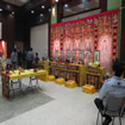
25-item all-inclusive package, including 6 Taoist ritual masters and a full set of paper offerings with furnace rental, and the rituals are explained step by step.
Hung Hom · Complete Funeral Services · FEHD-Licensed Undertaker
A guide to Taoist, Buddhist, Catholic, Protestant Christian and non-religious funerals, explaining the sequence, supplies, venues and etiquette for each.
When the deceased passes away, the family must first decide on four things: Cremation and burial, religious ceremony, setting up the mourning hall location, and burial location . The "choosing and planting ceremony" will have a chain impact on the other three items - What coffin to use, what burial clothing to choose, whether to use paper offerings, rent an auditorium, and whether to burn paper offerings for worship in the future , all start with this decision.
This page will explain one by one the procedures, supplies, venue requirements and attendee etiquette of the five major funeral religious forms in Hong Kong, and especially answer the most frequently asked question " What is the difference between Catholicism and Christianity ".
Tim Fat Funeral is FEHD licensed undertaker , shop address G/F, 26 Baker Street, Hung Hom, Kowloon, Hong Kong . We are happy to provide free professional advice (852) 82099774 Mr Wu.
| form | officiating | core link | Paper offerings | atmosphere |
|---|---|---|---|---|
| Taoism | Taoist ritual masters | Breaking the Hell Gate ritual, carrying flags to buy water, sitting on a lotus, opening a path to bring wealth, crossing the gold and silver bridge, saying goodbye to spirits | Multiple (part of the scientific instrument) | Solemn and lively, with gongs and drums percussion |
| Buddhism | Buddhist officiant | Pay tribute, chant sutras, worship, make offerings, dedicate | Simpler | Quiet and solemn |
| Catholic Funerals | priest or deacon | Wake prayer, enshrinement ceremony, funeral (memorial) mass, farewell ceremony, burial ceremony | No need | Solemn and holy, with hymns |
| Protestant Christian Funerals | pastor | Encoffinment service, rest service (memorial service), burial ceremony | No need | Quiet, warm and poetic |
| No religion | Officiant or family member | Life review, sharing with relatives and friends, flowers, and silence | Depends on family wishes | Freedom, focusing on nostalgia |
Taoism is the most common funeral religious ritual in Hong Kong . The more familiar rituals include Breaking the Hell Gate ritual, carrying flags to buy water, sitting on a lotus , etc. Some paper offerings are also burned in order to achieve " Yin and Yang happiness ". There are different rituals in different villages and places in China, such as Fujian and Chaozhou etc. have different customs. We also have professional groups to follow up .
Reciting the Inaugurating Sutra → Opening the Way → Luck and Fortune → Bathing → Carrying Flags to Buy Water → Breaking the Hell Gate ritual → Touring the Ten Halls → Untying the Knot → Sitting on the Lotus → Crossing the Gold and Silver Bridge → burning paper offerings → Ci Ling → post-funeral meal. The names and orders of each altar are slightly different.
" Orthodox Taoist Ritual Traditions " is one of the 20 items in the first "Representative List of Hong Kong Intangible Cultural Heritage" announced by the Leisure and Cultural Services Department in 2017; " Quanzhen Taoist Ceremonial Music " is a local item included in the national list of representative intangible cultural heritage items. In addition, " Traditional funeral rituals " are included in the first Hong Kong intangible cultural heritage list, No. 3.54 , which mainly include reciting the Taitou Sutra, Breaking the Hell Gate ritual, buying water, burial, luck in wealth, spiritual recitation, post-funeral meal and post-funeral meal etc.
Packages start from HK$8,800 , including 6 Taoist ritual masters and a full set of paper offerings with furnace rental, 25 items all-inclusive - see for a step-by-step explanation. One-stop service Taoism. Buddhist rituals ; paper offerings full interpretation paper offerings full explanation .
Buddhism is a common funeral religious ceremony in Hong Kong . The more familiar rituals include paying tribute and so on. The purpose is to transcend the deceased and reincarnate as soon as possible .
Rebirth quilt, lotus seat, rebirth money, lotus tablet, and fruit offerings. Post-funeral meals also include vegetarian options. The atmosphere is calmer than Taoism, and the requirements for venue space are lower.
Catholicism is a common funeral religious ceremony in Hong Kong . It will preach, offer incense, sing hymns, pray etc. The purpose is to commemorate the deceased and bless the deceased to enjoy eternal life in heaven .
Usually held at a funeral parlour or church on the evening before the funeral, the vigil allows relatives and friends to accompany the deceased in prayer. A priest or prayer leader leads the family in the readings and prayers. Fellow parishioners also help sing hymns, recite the Rosary and share their faith. The emphasis is on prayer and listening to the Word of God.
The main structure is: Greetings and introduction, holy ceremony, blessing the coffin, offering incense, sprinkling holy water, praying, placing the body of the deceased into the coffin, paying tribute to the body of the deceased, covering the coffin, and completing the ceremony . Arrangements in some parishes include greetings, prayers, Bible readings, responsorial chants and other sacred liturgies, as well as prayers, blessings, sprinkling of holy water, offering frankincense , and finally paying homage to the deceased , with the officiating priest leading the coffin out of the mourning hall.
Reception of the body: The priest receives the coffin at the church entrance and sprinkles it with holy water, recalling the deceased’s baptism and symbolising purification and blessing. The coffin then enters the church to solemn hymns.
Liturgy of the Word: This includes Scripture readings, the responsorial psalm, the Gospel and the priest’s homily, focusing on the hope of resurrection and God’s salvation.
Liturgy of the Eucharist (when Mass is celebrated): This includes the presentation of bread and wine, consecration and Holy Communion, central elements of the Catholic faith.
The priest circles the coffin and burns incense , symbolizing the ascent of prayer to God and respecting the body of the deceased as a holy temple . All relatives and friends pay their last respects to the deceased, and in the sound of hymns, the coffin is moved out of the church and sent to the cemetery or crematorium.
Final burial rites are held at the crematorium or cemetery. Regarding Catholic cemeteries, there are Happy Valley Catholic Cemetery and Cheung Sha Wan Catholic Cemetery in Hong Kong. For details, please see exhumation. Cemetery .
Do you think you will sprinkle holy water and burn incense? Sprinkling holy water is recalling the identity of the deceased when he was baptized , symbolizing cleansing and blessing; burning incense (offering incense and frankincense) is Symbolizing the ascent of prayer to God and respecting the body of the deceased as a temple of the Holy Spirit . Both are formal links in Catholic funeral rituals, and have different meanings from folk incense.
Christianity is also a common funeral religious ceremony in Hong Kong , including preaching, singing hymns, praying , etc. The purpose is the same as that of Catholicism, which is to commemorate the deceased and bless the deceased to enjoy eternal life in heaven .
Christian funerals are mainly divided into three stages: enshrinement, rest service (or memorial service) and funeral , which will be officiated by pastor .
It is usually held in the funeral parlour or the hospital mourning room before the funeral service. The pastor leads the family members to pray and read the Bible , and then the coffin closing ceremony is performed. Although this link is short, it is of great significance to the family members and symbolizes entrusting the deceased to God . The enshrinement ceremony usually lasts about 15 to 30 minutes . At this time, the family can say their final goodbyes to the deceased.
The pianist played sacred music and played quiet and hopeful songs, allowing the guests to quiet their hearts and enter the atmosphere of worship.
The officiant reads Bible verses (such as Psalm 23 , John Chapter 11 ) and announces the start of the service.
The congregation sings hymns together, such as " The Lord is My Shepherd ", " Amazing Grace ", etc. They can also sing hymns that the deceased loved during his lifetime.
The officiant led the prayer, asking God to comfort the family and bless the entire ceremony.
Read aloud scriptures related to eternal life and comfort, such as , Revelation Chapter 21, Romans Chapter 8 , etc.
Choirs or relatives and friends sing hymns; the deceased’s life is briefly described, testimonies are shared, and precious photos are often shown.
The pastor shares biblical information, encourages the congregation to think about the meaning of life, and delivers gospel hope.
Family members shared touching stories and played clips of memories.
Thanks to relatives, friends and helpers, the pastor blessed and prayed for the family.
The pastor blesses the congregation and declares the end of the service; relatives and friends go to the coffin in order to say their final farewells to the deceased.
The funeral procession Or move the spirit to the crematorium or cemetery for the burial ceremony.
Rest service vs. Memorial service: The two are often used interchangeably in Hong Kong, The names also vary according to sects . Generally speaking, the burial service is usually held on the day of the funeral procession, and the body of the deceased will be present ; some churches will also arrange to hold the burial service or memorial service on the first night to facilitate the attendance of relatives and friends, and then conduct a brief the funeral procession the next morning Ceremony or speech ceremony , and then sent to the crematorium or cemetery. Please confirm with your church for actual arrangements.
We are happy to provide free professional advice (852) 82099774 Mr Wu
The purpose of both is the same - to commemorate the deceased, to wish the deceased to go to heaven and enjoy eternal life - but there are obvious differences in etiquette.
| Project | Catholic Funerals | Protestant Christian Funerals |
|---|---|---|
| Officiant | Priest or Deacon | Priest |
| Core Etiquette | Mass (including Holy Sacrifice, consecration of bread and wine, consecration of the Eucharist and reception of Holy Communion) | Sabbath service (call, sing, read scripture, preach, no Mass ) |
| Ritual Elements | Sprinkle holy water, offer incense (frankincense), and bless the coffin | Normally does not use holy water and incense |
| Venue | Funeral Masses are often celebrated in the sanctuary and also in the funeral parlour. | Usually held in funeral parlour auditorium or church |
| Prayer | The Rosary and prescribed liturgical prayers are recited | Mainly free prayer and Bible reading |
| Stage name | Wake prayer → Encoffinment ceremony → Funeral/Memorial Mass → Farewell ceremony → Burial ceremony | Encoffinment Ceremony → Resting Service (Memorial Service) → Funeral Service |
| Music | Hymn , more solemn and ceremonial | Hymns , such as "Amazing Grace" and "The Lord is My Shepherd" |
| paper offerings | No need | No need |
Common points: Both Do not burn paper offerings , instead use flowers, poems, Bible readings and prayers to express your feelings; there are also many choices for burial clothing Plain and simple style (promising in the market) Christian design burial clothing), with Western style coffin . Attendees offered flowers and silent prayers instead of offering incense .
If the deceased did not have a clear religious belief during his lifetime, or family members have different beliefs, a non-religious farewell ceremony (memorial service) is a neutral and warm choice. Free form, with the deceased’s life as the main axis .
Advantages: There is no religious threshold, Relatives and friends of any faith can participate freely ; it also best reflects the personal character and life of the deceased. Need to pay attention to: Because there is no established process, it requires advance planning and control by the emcee, otherwise it is easy to be indifferent. We can help organize the process, arrange emcee and audio-visual equipment.
Various villages and places have different rituals. Different places in China, such as Fujian and Chaozhou, have different customs. We also have professional groups to follow up.
Hong Kong is a city of immigrants. Many families have different origins, and funeral customs are also different. Common differences include:
| Category | possible differences |
|---|---|
| Shape of filial piety | There are different styles of linen clothes, colours of filial piety badges, and ways of wearing them according to seniority. |
| Scientific ritual sequence | The sequence of sessions and whether there are specific rituals (for example, Breaking the Hell Gate ritual is not performed in some areas) |
| Chanting language | Cantonese, Teochew, Hokkien or Hakka |
| Music style | The percussion configuration, singing style and tunes are different |
| Sacrifice configuration | Type, quantity and placement of supplies |
| paper offerings style | Special forms of paper offerings are used in specific areas. |
| Observing filial piety and returning gifts | Detailed differences in the number of days of mourning, content of funeral return gifts, and methods of return gifts |
What should you do? If your family follows particular traditions, or your elders have specific wishes for the rites, please tell us at the outset. Our specialist team can accommodate different regional customs and arrange suitable ritual masters and rites for your family’s ancestral background, avoiding unexpected differences in practice on the day.
After choosing a religious form, the following things must be confirmed simultaneously.
| form | Site considerations |
|---|---|
| Taoism | Equipped with percussion instruments such as gongs, drums, and cymbals, the sound is louder ; larger space is required for moving parts such as Breaking the Hell Gate ritual |
| Buddhism | Less space is needed; choose a relatively quiet location. |
| Catholic Funerals | Funeral masses are often held in church ; if in funeral parlour, it is better to choose a quiet floor |
| Protestant Christian Funerals | Mostly in funeral parlours or churches; it is advisable to avoid the noise of funeral services in neighbouring churches. |
| No religion | Requires audio and video equipment (projection, audio) to play life review |
Practical tips: The 3rd floor of Kowloon Funeral Parlour has a unique silent floor , suitable for Christians, Catholics and non-religious people to avoid interference from the gongs and drums of neighbouring churches. For a complete comparison of the seven licensed funeral parlours, see Full Guide to Funeral Parlours .
| form | burial clothing | Coffin | paper offerings |
|---|---|---|---|
| Taoism/Tradition | Complete set of Chinese style, available in bright and fancy colours, embroidered with auspicious patterns | Chinese coffin | A full set of religious paper offerings |
| Buddhism | Sober and solemn | Chinese or Western | Simpler (lotus seat, money for rebirth) |
| Catholic Funerals | plain simple | Western coffin | No need |
| Protestant Christian Funerals | Plain style for Christians | Western coffin | No need |
| No religion | According to the style of the deceased, the clothes before death can be used | According to family wishes | Depends on family wishes |
Regardless of the form , supplies must comply with FEHD cremation regulations: avoid metal zips, plastic buttons, PVC coating ; the coffin should be avoided larger than height 710/width 760/length 1,980 mm , and the surface must not be inlaid with metal or PVC Annexes and must comply with the Cremation and Gardens of Remembrance Regulation ( Chapter 132M ).
Consider religious practices when choosing columbarium niche . There are no facilities for burning incense and candle offerings in the area where the incense-free niche is located , and flowers, fruits, etc. must be used instead: FEHD Shek Mun columbarium is completely incense-free ; Chinese Permanent Cemetery Tseung Kwan O Cemetery Section A39 and Sung Hsiao House niche belongs to the forbidden fragrance niche . It has a greater impact on Taoist and traditional families who are accustomed to burning paper offerings; it has a smaller impact on Catholic, Christian and non-religious families who mainly use flowers.
When attending funerals of different religions, the ways of paying tribute are different. If you are not sure, pay attention to the instructions of the master of ceremony or family members, or observe the actions of relatives and friends in front of you , which will be the most stable way.
| form | Way of offering sacrifices |
|---|---|
| Taoism/Tradition | Shang Xiang and Bow (usually three bows) |
| Buddhism | You can put your hands together to inquire , or follow the on-site instructions to offer incense |
| Catholic Funerals | Usually is used to lay flowers and pray silently ; on some occasions, there is an incense-laying session, which can be arranged according to the parish. |
| Protestant Christian Funerals | Offer flowers and pray silently instead of offering incense |
| No religion | Present flowers , bow or observe silence |
For more funeral customs and taboos, see FAQ 82 .
This situation is actually very common - the deceased believes in Buddhism and his children believe in Christianity; or half of the family members adhere to tradition and the other half ignore it. The following three compromise directions are for reference:
The most commonly used and least controversial principle: The funeral is for the deceased . The form of the ceremony is determined by the deceased’s beliefs during his lifetime. If the deceased was baptized or converted during his lifetime, that faith will usually prevail.
For example, hold a Christian funeral service as the principal ceremony, with a separate time for elders to pay respects according to their traditions. Alternatively, hold Taoist rites with a separate time for Christian relatives to pray privately. Discuss the arrangements with the clergy and ritual masters beforehand.
It focuses on life review, sharing with relatives and friends, and presenting flowers . There is no religious threshold. Relatives and friends of any faith can freely participate . It is suitable for situations where the family has different opinions and does not want to argue over it.
It is recommended to discuss this as early as possible. Because the ceremony format will have a chain impact on venue selection, time arrangements, coffin burial clothing configuration and paper offerings requirements , and the entire timeline is based on ’s allocated cremation time as the anchor point - once the cremation time slot is determined, there is very little room for modification. For the complete process, see Eight-step Guide to Posthumous Affairs .
Supporting arrangements
25-item all-inclusive package, including 6 Taoist ritual masters and a full set of paper offerings with furnace rental, and the rituals are explained step by step.
Auditorium size, rental range and arrangements for the quiet floor on the 3rd floor of Kowloon Funeral Parlour.
The 19 ritual paper offerings have meanings one by one; Catholics and Christians do not burn paper offerings.
The difference between traditional and Christian styles, as well as single-piece configurations for men and women.
Chinese style with traditional ceremony, Western style with Catholic Christianity, with cremation size rules.
The impact of incense-free sites on future worship, and information on Catholic and Christian cemeteries.
There are five main types: Taoism, Buddhism, Catholicism, Christianity , and Non-religious farewell ceremony . Taoism is the most common funeral religious ceremony in Hong Kong , and Buddhism is also quite common; Catholicism and Christianity mainly focus on preaching, singing hymns, and praying. There are also arrangements based on local customs (such as Fujian and Chaozhou) We also have professional groups to follow up .
Taoism is the most common funeral religious ritual in Hong Kong . The more familiar rituals include Breaking the Hell Gate ritual, carrying flags to buy water, sitting on a lotus , etc. Some paper offerings are also burned in order to achieve " Yin and Yang happiness ". There are different customs in various villages and places such as Fujian and Chaozhou. Package starts from HK$8,800 , including 6 Taoist ritual masters and a full set of paper offerings with furnace rental.
Buddhism is a common funeral religious ceremony in Hong Kong . The more familiar rituals include paying tribute and so on. The purpose is to transcend the deceased and reincarnate as soon as possible . The overall atmosphere is relatively calm with the Master chanting sutras, worshiping, making offerings, and dedicating . The Amitabha Sutra and the Rebirth Mantra are often recited, and the atmosphere is relatively calm; paper offerings are relatively simple, and post-funeral meals are mostly arranged . Vegetarian meals are arranged.
Catholicism is a common funeral religious ceremony in Hong Kong . It will preach, offer incense, sing hymns, pray etc. The purpose is to commemorate the deceased and bless the deceased to enjoy eternal life in heaven . The liturgy is divided into several stages: wake prayer, enshrinement ceremony, funeral (memorial) mass, funeral ceremony and funeral , which are officiated by priest or deacon .
It is usually held the night before the funeral procession at the funeral parlour or the church , allowing relatives and friends to accompany the deceased to pray together, and the priest or the prayer leader will lead the recitation of scriptures, The faithful will help sing hymns, pray the rosary and share their faith . The emphasis is on prayer and listening to the Word .
Main structure: Greetings and introduction, holy ceremony, blessing the coffin, offering incense, sprinkling holy water, praying, placing the body of the deceased into the coffin, paying tribute to the body of the deceased, covering the coffin, and completing the ceremony . Some of the parish arrangements include greetings, prayers, Bible readings, responsorial chants and other sacred liturgies, as well as prayers, blessings, sprinkling of holy water, offering of frankincense , and finally paying homage to the deceased , with the officiating priest leading the coffin out of the mourning hall.
Reception of the body: The priest receives the coffin at the church entrance and sprinkles it with holy water, recalling baptism and symbolising purification and blessing. The coffin enters to hymns. Liturgy of the Word: Readings, the responsorial psalm, Gospel and homily focus on the hope of resurrection. Liturgy of the Eucharist (at Mass only): Presentation of bread and wine, consecration and Holy Communion. Final commendation: The priest incenses the coffin; everyone pays their final respects before it is taken out.
Sprinkling holy water is recalling the identity of the deceased when he was baptized , symbolizing cleansing and blessing; burning incense (offering incense, frankincense) symbolizing praying to God, and respecting the body of the deceased as a holy temple . Both are formal parts of Catholic funeral rituals and have different meanings from folk incense.
Christianity is also a common funeral religious ceremony in Hong Kong , including preaching, singing hymns, praying , etc., with the same purpose as Catholicism. The process is divided into three stages: enshrinement ceremony, rest service (or memorial service) and burial ceremony , which will be officiated by pastor .
It is usually held in the funeral parlour or the hospital memorial room before the funeral service. The pastor leads the family members to pray and read the Bible , and then the coffin covering ceremony is performed, symbolizing entrusting the deceased to God . It usually lasts about 15 to 30 minutes and family members can say their final goodbyes at this time.
The total duration is about 30 to 60 minutes . Common process: Overture/entrance music → Call → Sing → Pray → Bible reading → Dedicate poems or life stories → Sermons and condolences → Speeches from family members or memorial videos → Thank you and congregational prayers → Blessings → Pay respects to the deceased → Ending hymn and spiritual release (supporting the funeral procession or moving to the crematorium).
The terms are often used interchangeably in Hong Kong, with usage varying by denomination. Generally, a funeral service takes place on the day of the funeral, with the deceased’s body present. Some churches arrange a funeral or memorial service on the first evening so relatives and friends can attend, followed by a short funeral departure or final commendation service on the following morning. Confirm the arrangements with the relevant church.
Common hymns: " Amazing Grace ", " The Lord is My Shepherd ", " The Lord is My Shepherd ", etc. You can also sing songs that the deceased loved during his lifetime. Common scriptures: Psalm 23, John Chapter 11 Verse 25, Revelation Chapter 21, Romans 8 , etc. The content revolves around comfort and the hope of eternal life. The actual decision will be discussed between the officiating pastor and the family.
Five differences: 1. Officiant: a Catholic priest or deacon, or a Protestant pastor. 2. Central liturgy: a Catholic Mass includes the Eucharistic liturgy, consecration and Holy Communion; a Protestant funeral service does not include Mass. 3. Ritual elements: Catholic rites include holy water, incense and blessing of the coffin, generally absent from Protestant services. 4. Venue: Catholic funerals often take place in a church; Protestant services often use a funeral hall or church. 5. Prayers: Catholics recite the Rosary; Protestant services focus on free prayer and Scripture readings.
Taking the life of the deceased as the main axis , the form is free. Common: Life review videos or photos, sharing with relatives and friends, playing the deceased’s favorite music, laying flowers instead of incense, hosting the ceremony, observing silence, and family members’ speeches of thanks . It is suitable for situations where family members have different religious beliefs or the deceased has no clear religious beliefs.
The examples in different villages may have differences in the form of filial piety clothes, the arrangement of sacrifices, the sequence of rituals, the chanting language (Cantonese, Chao, Minnan, Hakka) and the music style . We also have professional groups to follow up and can arrange appropriate masters and rituals according to family ancestral traditions.
Three directions: 1. Use the deceased’s own beliefs as the main celebrant (least controversial); 2. The celebrant adopts a form and set up a short session to take into account the wishes of other members; 3. Choose a non-religious farewell ceremony as a neutral plan . It is recommended to discuss early, because the ceremony format will affect the venue, time and supply configuration.
Taoism With gongs, drums and cymbals percussion, the sound is loud, and requires a large space to perform the Breaking the Hell Gate ritual; Buddhism The space requirements are low; Catholicism Masses are often held in the church; Christianity and no religion It is better to choose a quiet environment. Attention The 3rd floor of Kowloon Funeral Parlour has a unique silent floor, suitable for Christians, Catholics and non-religious people .
Taoism and tradition General Offering incense and bowing (usually three bows); Buddhism Yes Praying with hands and asking questions ; Catholicism and Christianity More Present flowers and pray silently instead of offering incense. After arriving, pay attention to the instructions of the emcee or family members. Also note that do not say "thank you" to your family members (you can use "you have a good heart" instead), and do not see guests off when leaving .
Yes. Taoism and tradition Multi-purpose full set of Chinese burial clothing (can be brightly coloured and embroidered with auspicious patterns) with Chinese coffin; Catholic and Christian Multiple choice Plain simple style (available in the market Designed for Christians burial clothing) and multiple selections Western-style coffin ; Buddhist tends to be plain and solemn, and can be paired with a death quilt and a lotus seat. Either way, FEHD cremation regulations must be met.
Paper offerings are mainly used in Taoist and traditional folk ceremonies as physical symbols within the rites rather than decorations. Buddhist practice is simpler (lotus seats and rebirth paper money). Paper offerings are not burned at Catholic memorial Masses or Protestant Christian funeral services; flowers, hymns, scripture readings and prayers are used instead. Non-religious farewell ceremonies generally focus on flowers and reflections on the deceased’s life.
It will have an impact on future worship services. There are no facilities for burning incense and candles in the area where the incense-free niche is located . Flowers and fruits must be used instead. Shek Mun columbarium is completely incense-free ; BMCPC Tseung Kwan O Section A39 and Chongxiao House new niche are all incense-free spots . It has a greater impact on Taoist and traditional families who are accustomed to burning paper offerings; it has a smaller impact on Catholic, Christian and non-religious families who mainly use flowers.
Depends on five items: The number of clergy or masters, the number of sessions or events, the total number of hours, whether it includes large-scale sessions such as Breaking the Hell Gate ritual, paper offerings or the scale of ritual supplies . One-stop package for Taoist and Buddhist rituals starting from HK$8,800 . Regarding Catholicism and Christianity, churches or parishes have different arrangements and practices, so it is recommended to inquire about them together.
Not sure you should choose the side planting ceremony? Don't rush. You can tell us first: whether the deceased had any faith during his lifetime, whether he was baptized or converted, whether the family has ancestral traditions, whether everyone in the family has the same opinion, and how many relatives and friends are expected to attend. We will provide feedback based on the actual situation and explain the process, time, venue requirements and approximate charges for each form.
Tim Fat Funeral is FEHD licensed undertaker , store address G/F, 26 Baker Street, Hung Hom, Kowloon, Hong Kong , can arrange Taoist, Buddhist, Catholic, Christian and non-religious and other types of ceremonies, and has professional groups to follow up on different local customs . Serving Hung Hom, To Kwa Wan, Kowloon City, Ho Man Tin, Whampoa, Yau Tsim Mong, Sham Shui Po, and Wong Tai Sin areas, and also undertakes all districts in Hong Kong. Mr Wu is available 24 hours a day.
Contact method: Phone (24 hours) 82099774 · WhatsApp 62384028 · Email timfatfuneral@gmail.com ·Fax 3599 9637·Address: G/F, 26 Baker Street, Hung Hom, Kowloon, Hong Kong. For transportation details, please see and contact us .
For information on Catholic funerals and funerals on this page, please refer to "Christian Funerals" (Ordo Exsequiarum) and the passage arrangements of local parishes and pastoral groups; the Christian rest service process refers to the etiquette manuals of Hong Kong churches and industry information; the Taoist intangible cultural heritage information is quoted from the Leisure and Cultural Services Department's "Hong Kong Intangible Cultural Heritage Representative List" (announced in 2017) and the "Hong Kong Intangible Cultural Heritage List" (Traditional Funeral Rituals, No. 3.54); the cremation regulations and the incense-free venue information are quoted from the Food and Environmental Hygiene Department (FEHD) and the Board of Management of the Chinese Permanent Cemeteries (BMCPC) announced. Actual arrangements may vary among denominations, parishes, altars and regions. Please confirm with your church, temple or officiating master. This page was last edited: September 2026.